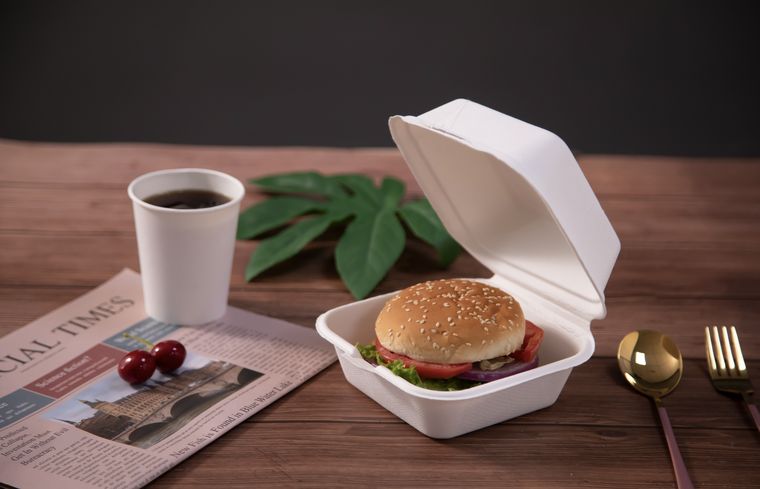
What are the classifications of pulp tableware products? Including sets of tableware, including metalware, ceramic tableware, tea and wine sets, glassware, paperware, plasticware, as well as various container tools, handware and other utensils for various purposes. So, what are the classifications of pulp tableware products? What are the classifications of pulp tableware products? 1. Ceramic tableware: When choosing porcelain tableware, tap the porcelain gently with your index finger. If it can make a clear sound, it means the porcelain body is delicate and burned well. If the knocking sound is mute, it means that the porcelain is damaged or the quality of the porcelain embryo is poor. 2. Glass tableware: clean and generally does not contain toxic substances. Substances harmful to human health will be produced and should be washed away frequently with alkaline detergent. 3. Enamel tableware: Enamel products have good mechanical strength, are solid, not easily broken, have good heat resistance, and can withstand a wide range of temperature changes. The texture is smooth, dense, dust-free, clean and durable. The enamel is uniform and bright in color, and the base powder and embryo should not be exposed. 4. Wooden tableware: The biggest advantage of bamboo tableware is that it is easy to obtain materials and does not have the toxic effects of chemicals. 5. Copper tableware: On the surface of copper tableware, you can often see some blue-green powder. This powder is called patina and is non-toxic. But for the sake of cleaning, use sandpaper to polish the surface of the copper tableware before loading food. 6. Iron tableware: It is not advisable to use iron containers to hold cooking oil, because oil is easily oxidized and deteriorated when stored in iron for too long. 7. Aluminum tableware: non-toxic, durable, high quality and low price. However, excessive accumulation of aluminum in the human body has the effect of accelerating aging and has certain adverse effects on human memory. 8. Alloy tableware: It has the advantages of high temperature resistance, corrosion resistance, radiation resistance, flame retardancy, balanced physical and mechanical properties, excellent dimensional stability, and excellent electrical properties. 9. Stainless steel tableware: beautiful, light, easy to use, corrosion-resistant and rust-free, and deeply loved by people. Stainless steel is made from an iron-chromium alloy mixed with nickel, molybdenum and other metals. Therefore, when using, be careful not to store salt, soy sauce, vinegar, etc. 10. Titanium tableware: Titanium tableware is the development trend of tableware materials in the future because it has excellent properties such as light weight, light use, non-toxic, odorless, non-radiative, non-rusting, corrosion-resistant, wear-resistant, good toughness, and good bioaffinity. What are the methods for deodorizing pulp tableware products? 1. Deodorize milk: First clean it with dish soap, then pour two soups of fresh milk into the tableware, cover it, and shake it so that every corner of the cup comes into contact with the milk for about a minute. Then pour away the milk and wash the dishes. 2. Orange peel deodorization method: First clean it with dish soap, then put the fresh orange peel into the pot, cover it, and rinse it for about 3 to 4 hours. 3. Use waste tea leaves to deodorize. If the tableware has a fishy smell, scrub it with waste tea leaves and then rinse with water to remove the fishy smell. 4. Soak in salt water for 30 minutes. If none of the above methods can remove the odor from the tableware, and there is a strong pungent smell from the tableware when washed in hot water, then consider not using this tableware for drinking water.
News Archive: Factory Updates & Trends
- After plastic, who will be the next generation of food packaging protagonist? 2026-06-16
- Canada's final anti-dumping and countervailing rulings have been implemented, and the global pulp molding industry is ushering in new changes! 2026-06-05
- [Breaking news] Based in China and going global | The founder of pulp molding will soon appear at the Interpack global packaging exhibition in Germany! We invite you to explore the new future of sustainable fully degradable packaging from May 7th to 13th! 2026-05-12
- The second phase of the 139th Canton Fair concluded successfully 2026-04-29
- "Pulp Molded Tableware Laminating Technology: How to Enable Environmentally Friendly Packaging Upgrades?" 》 2026-04-15
- Unlock the key to "trust"! Thai factory wins international certification grand slam! 2026-03-24