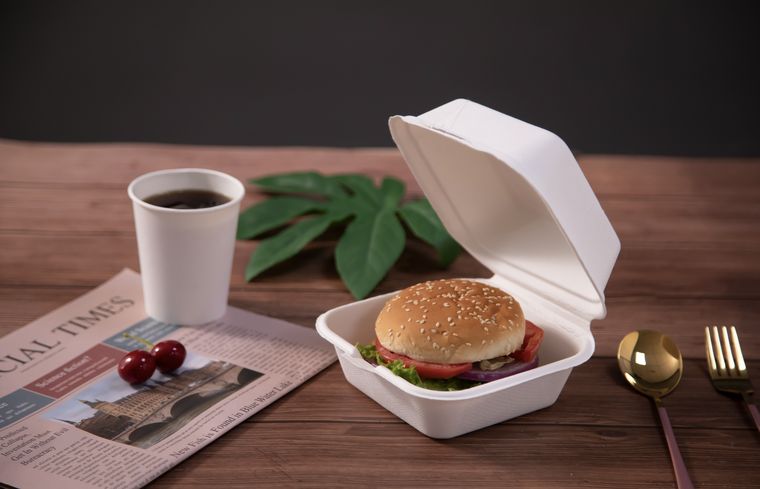
Basic information about pulp tableware? We have made a brief introduction to this issue before, but found that many customers still do not understand it. It just so happens that I will take this opportunity to explain it to you today. Hope it can bring good help to relevant people. Paper pulp tableware is also a product that is widely used at present. It plays a very important role in application. In fact, paper pulp tableware is made by vacuum adsorbing the pulp using a mold, drying it, and then deep processing it to replace metal and plastic tableware for people to use. Its production process can be roughly divided into its main raw materials and related auxiliary materials, and with a certain beating degree, when manufacturing pulp tableware, the pulp will be mixed into pulp tableware raw material slurry at a certain concentration. And according to our understanding, we also found that its main raw material is generally bleached wood pulp, which can be purchased directly from professional pulp and paper mills (made by a series of processing of wood). If you don't know much about this basic information. Small ones can be read carefully. Of course, it usually needs to use imported wood pulp to produce more commercial products; mid-range products can choose domestic ordinary wood pulp. Generally speaking, some low-end pulp tableware can use short fiber pulp such as sugarcane bagasse, wheat straw pulp, bamboo pulp, reed pulp and selected white paper edges. Therefore, when manufacturing pulp tableware, in order to achieve rational utilization of raw materials and reduce costs, different pulp types can be matched according to different product needs. In addition, what everyone needs to know here is that the pulp tableware's bubbles and the action of the hydraulic turbine beater saponify the fiber fibers to improve its fiber binding ability; therefore, what you need to know is that its related auxiliary materials are actually added to improve the humidity resistance of the pulp tableware molding and the waterproof performance of the finished product. In this case, specific related auxiliary materials can be added to the slurry, and the level of addition can be adjusted to adjust the concentration of the original pulp to about 2% to facilitate the dehydration and molding of the original pulp on the mesh mold. Paper pulp tableware is environmentally friendly, hygienic, non-toxic and harmless. At the same time, it is resistant to high temperatures and does not deform or leak. It is suitable for baking in microwave ovens and freezing in refrigerators. And it has recycling value, and the fertilizer can be recycled. This is a high-tech group company focusing on the research and development, manufacturing and international trade of pulp molding environmentally friendly food packaging equipment. After all, it is very famous in this industry, with reasonable prices and guaranteed quality. You won't be disappointed. After the introduction of the above content, we have a more detailed understanding of the advantages of paper pulp tableware, and we also know its characteristics and where it is usually used. If you have any questions that you don’t understand, you can call and ask.
News Archive: Factory Updates & Trends
- After plastic, who will be the next generation of food packaging protagonist? 2026-06-16
- Canada's final anti-dumping and countervailing rulings have been implemented, and the global pulp molding industry is ushering in new changes! 2026-06-05
- [Breaking news] Based in China and going global | The founder of pulp molding will soon appear at the Interpack global packaging exhibition in Germany! We invite you to explore the new future of sustainable fully degradable packaging from May 7th to 13th! 2026-05-12
- The second phase of the 139th Canton Fair concluded successfully 2026-04-29
- "Pulp Molded Tableware Laminating Technology: How to Enable Environmentally Friendly Packaging Upgrades?" 》 2026-04-15
- Unlock the key to "trust"! Thai factory wins international certification grand slam! 2026-03-24